If you often find yourself wondering where your paycheck went by the end of the month, you are not alone. Millions of people struggle with personal finance simply because they lack a structured plan. Learning how to budget money is the single most important skill you can master to achieve financial stability, eliminate debt, and build long-term wealth.
In this comprehensive guide, we will break down the exact steps you need to take to create a budget that works for your unique lifestyle. Whether you are living paycheck to paycheck, trying to pay off student loans, or aiming to save for early retirement, understanding how to manage your cash flow is the foundation of financial success.
As an SEO content expert and financial educator, I have designed this 2,500+ word guide to be your ultimate roadmap. We will cover the psychology of spending, step-by-step setup instructions, the most popular budgeting frameworks, and the common pitfalls that derail most beginners.
Contents
- 1 1. What Does It Actually Mean to Budget Money?
- 2 2. Why Is Budgeting So Crucial for Your Future?
- 3 3. Step-by-Step Guide on How to Budget Money
- 4 4. The Most Popular Budgeting Methods Explained
- 5 5. Overcoming the Impact of Inflation on Your Budget
- 6 6. Common Budgeting Mistakes and How to Avoid Them
- 7 7. The Best Tools and Apps to Manage Your Budget
- 8 8. Frequently Asked Questions (FAQs)
- 9 Conclusion
1. What Does It Actually Mean to Budget Money?
Before diving into the mechanics, we must redefine what a budget is. Many people hear the word “budget” and immediately think of a financial diet—a restrictive, joyless set of rules designed to stop them from buying the things they love. This is a fundamental misconception.

A budget is simply a proactive plan for your money. It is the process of telling your money where to go, rather than wondering where it went.
When you learn how to budget money effectively, you are not punishing yourself; you are giving yourself permission to spend without guilt. If you allocate $150 a month for dining out, you can enjoy those restaurant meals knowing that your rent, utilities, and savings are already covered. A budget brings intention to your income. It acts as a compass, aligning your daily spending habits with your long-term life goals.
The Psychology of Money Management
Budgeting is as much about psychology as it is about math. Often, our spending habits are tied to emotional triggers—stress, boredom, or the desire for social status. A budget forces you to confront these habits objectively. By writing down every dollar you earn and spend, you move your finances from the emotional part of your brain to the logical part. This shift is crucial for breaking bad financial habits and establishing healthier ones.
2. Why Is Budgeting So Crucial for Your Future?
You might wonder if the effort of tracking your finances is truly worth it. The answer is a resounding yes. Here is a deep dive into why learning how to budget money is a life-changing endeavor:
1. It Shines a Light on Bad Spending Habits
Without a budget, it is incredibly easy to overlook “phantom expenses”—those small, daily purchases that drain your bank account. A $5 daily coffee, multiple streaming subscriptions you rarely use, and frequent impulse buys on Amazon can add up to hundreds of dollars a month. A budget acts as a financial mirror, showing you exactly where your leaks are so you can plug them.
2. It Accelerates Debt Repayment
If you are drowning in credit card debt, personal loans, or student debt, a budget is your lifeline. By optimizing your spending, a budget helps you find extra cash to throw at your principal balances. It allows you to utilize strategies like the Debt Snowball or Debt Avalanche methods effectively, saving you thousands of dollars in interest over time.
3. It Builds a Fortress of Financial Security (Emergency Fund)
Life is unpredictable. Cars break down, medical emergencies happen, and layoffs occur. A core component of learning how to budget money is systematically building an emergency fund. Having three to six months of living expenses saved provides profound peace of mind. A budget ensures you prioritize this savings goal month after month.
4. It Helps You Achieve Major Life Goals
Do you want to buy a house, travel the world, or retire at 55? These goals do not happen by accident; they require deliberate financial planning. A budget breaks down these massive, intimidating goals into small, manageable monthly contributions.
5. It Reduces Financial Stress and Relationship Friction
Money is consistently cited as one of the leading causes of stress and divorce. A transparent, well-maintained budget eliminates the anxiety of the unknown. For couples, budgeting together fosters communication, ensures both partners are on the same page, and builds a shared vision for the future.
3. Step-by-Step Guide on How to Budget Money
Creating a budget is not a complex mathematical equation; it is a straightforward process of organization. Follow these five fundamental steps to build a bulletproof financial plan.
Step 1: Calculate Your Exact Net Income
The first step in learning how to budget money is knowing exactly how much you have to work with. Do not look at your gross salary (the big number on your employment contract). You need to calculate your net income, which is your take-home pay after taxes, health insurance, retirement contributions, and other deductions have been removed.
- For Salaried Employees: This is simple. Look at your recent pay stubs and sum up the amount deposited into your bank account each month.
- For Freelancers, Gig Workers, and Entrepreneurs: Your income likely fluctuates. To be safe, calculate your average monthly income over the past six to twelve months. Alternatively, use your lowest-earning month as your baseline budget to ensure you can always cover your necessities, treating any extra income in better months as a bonus for savings or debt payoff.
Step 2: Track Your Current Spending
Before you can dictate where your money should go, you need to know where it is currently going. You cannot fix a problem you do not understand.
Spend one hour gathering your bank statements, credit card bills, and receipts from the past 30 to 60 days. Categorize every single transaction.
Typical categories include:
- Housing: Rent/Mortgage, HOA fees, property taxes.
- Utilities: Electricity, water, gas, internet, phone bill.
- Food: Groceries, dining out, delivery apps.
- Transportation: Car payments, gas, insurance, public transit, maintenance.
- Debt Payments: Credit cards, student loans, personal loans.
- Personal/Lifestyle: Gym memberships, streaming services, hobbies, clothing, haircuts.
Expert Tip: You will likely be shocked by how much you spend in certain categories (usually food and subscriptions). Do not judge yourself; just collect the data. This baseline is essential for the next steps.
Step 3: Set Clear, Actionable Financial Goals
A budget without a goal is like a road trip without a destination. What are you trying to achieve?
Divide your goals into three timelines:
- Short-Term Goals (1-12 months): Building a $1,000 starter emergency fund, paying off a high-interest credit card, or saving for a summer vacation.
- Medium-Term Goals (1-5 years): Saving for a wedding, accumulating a down payment for a house, or buying a reliable used car in cash.
- Long-Term Goals (5+ years): Investing for retirement, paying off a mortgage early, or saving for your children’s college education.
Write these goals down and attach a specific dollar amount and deadline to each. For example, instead of saying, “I want to save money,” say, “I want to save $6,000 for a down payment in 12 months.” This means you need to budget $500 a month towards this goal.
Step 4: Choose a Budgeting Method and Make a Plan
Now it is time to assign your net income to your expense categories and your goals. Subtract your required monthly expenses from your net income. The remaining money is what you will allocate toward your financial goals (savings and debt repayment) and your discretionary spending (fun money).
To structure this process, you need a budgeting framework. (We will explore the most popular methods in detail in Section 4).
Step 5: Monitor, Track, and Adjust Continuously
A budget is not a “set it and forget it” document. It is a living, breathing plan. As you move through the month, you must track your actual spending against your planned budget.
If you budgeted $400 for groceries but spent $300 in the first two weeks, you know you need to tighten your belt for the remainder of the month.
Furthermore, you will need to adjust your budget over time. Your rent might increase, you might get a raise, or you might pay off a loan. Sit down once a month (perhaps on a Sunday evening or the last day of the month) to review your spending, celebrate your wins, and draft the budget for the upcoming month.
4. The Most Popular Budgeting Methods Explained
There is no single “correct” way to budget. The best method is the one you will actually stick to. When learning how to budget money, you should test different frameworks to see which aligns best with your personality and financial situation. Here are the top four budgeting methods used by financial experts worldwide.
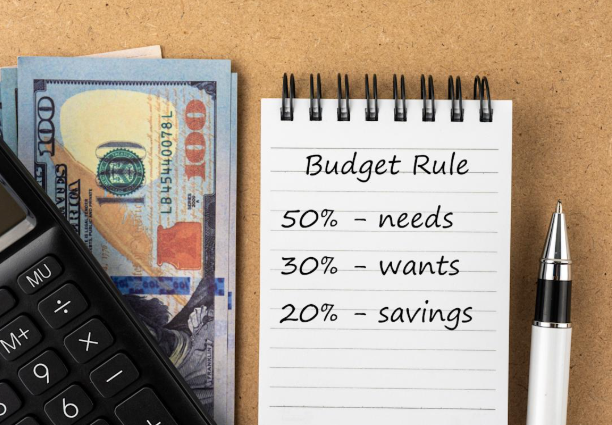
1. The 50/30/20 Rule
Popularized by Senator Elizabeth Warren in her book All Your Worth, the 50/30/20 rule is a simple, percentage-based budgeting method perfect for beginners who want a broad overview of their finances without tracking every single penny.
You divide your net income into three distinct buckets:
- 50% for Needs: These are the absolute essentials you must pay to survive. This includes rent/mortgage, basic groceries, utilities, minimum debt payments, and essential transportation.
- 30% for Wants: This is your lifestyle and entertainment bucket. It covers dining out, hobbies, vacations, designer clothing, Netflix, and the latest gadgets.
- 20% for Savings and Debt Repayment: This bucket is dedicated to building your future. It includes putting money into an emergency fund, investing in a 401(k) or IRA, and making extra payments on high-interest debt.
Pros: Extremely easy to understand and implement. Offers a great balance between enjoying the present and preparing for the future. Cons: If you live in a high-cost-of-living area (like New York or London), keeping your needs under 50% can be nearly impossible.
2. Zero-Based Budgeting
Zero-based budgeting is a highly disciplined approach that requires you to allocate every single dollar of your income to a specific category before the month begins. The formula is simple: Income – Expenses = Zero.
If you earn $4,000 a month, you must assign exactly $4,000 to various categories (rent, food, savings, debt, investments, charity, fun money). At the end of the budgeting process, you should have exactly $0 left “unassigned.”
If you allocate everything and still have $200 left over, you must give that $200 a job—put it in savings, invest it, or add it to your vacation fund. If your expenses exceed your income, you must immediately cut back on certain categories until you reach zero.
Pros: Maximizes financial efficiency. It forces you to be incredibly intentional and stops money from slipping through the cracks. It is heavily favored by debt-reduction experts. Cons: Time-consuming. It requires meticulous tracking of every transaction and can feel overwhelming for beginners.
3. The Envelope System (Cash Stuffing)
This is an old-school, tactile method that has recently seen a massive resurgence on social media (often referred to as “cash stuffing”). It is designed to physically prevent overspending.
Here is how it works: You cash your paycheck and divide the physical bills into various paper envelopes labeled with your budget categories (e.g., “Groceries,” “Gas,” “Dining Out,” “Clothing”).
When you go to the supermarket, you take the “Groceries” envelope. If the envelope is empty, you cannot buy any more groceries until the next month. You literally cannot overspend because the cash is gone.
Pros: Incredible for curbing impulse purchases and changing deep-rooted spending habits. Psychological studies show that paying with physical cash activates pain receptors in the brain, making you spend less compared to swiping a credit card. Cons: Inconvenient in a digital world where online shopping and automated bill payments are the norm. Carrying large amounts of cash also poses a security risk.
4. “Pay Yourself First” (The Reverse Budget)
If you hate spreadsheets and tracking categories, this method is for you. The philosophy is simple: Prioritize your savings and investments before you do anything else.
As soon as your paycheck hits your account, you immediately transfer a predetermined amount (e.g., 20%) into your savings, retirement, and debt-payoff accounts. Ideally, you automate these transfers so you never even see the money.
Once your future is funded, you can spend the rest of the money in your checking account however you want—no tracking required. As long as your bills are paid and you do not go into debt, you have succeeded.
Pros: Low maintenance, stress-free, and highly effective for building wealth automatically. Cons: It requires you to have enough income to comfortably cover your living expenses after the initial savings deduction. It is not suitable for people living on a razor-thin margin.
5. Overcoming the Impact of Inflation on Your Budget
In recent years, the global economy has seen significant inflation, meaning the cost of everyday goods—from eggs and milk to electricity and gasoline—has skyrocketed. Learning how to budget money effectively requires adapting to these macroeconomic changes.
When your expenses rise but your paycheck stays the same, your budget will break unless you take proactive steps. Here is how to inflation-proof your budget:
1. Audit and Negotiate Fixed Expenses
Do not assume your fixed expenses are set in stone. Call your car insurance provider and ask for a better rate, or shop around for a new policy. Negotiate your internet and phone bills. If your rent is increasing, consider moving to a more affordable neighborhood or taking on a roommate.
2. Gamify Your Grocery Shopping
Food is one of the most flexible categories in your budget, but it is also the one hit hardest by inflation. Start meal planning around what is on sale at the supermarket. Swap expensive cuts of meat for plant-based proteins like beans and lentils a few times a week. Buy generic store brands instead of name brands—they are often manufactured in the exact same facilities.
3. Implement the 48-Hour Rule for Discretionary Spending
Inflation shrinks your discretionary income. To prevent impulse buying, implement the 48-hour rule. If you see something you want to buy (shoes, a video game, a new gadget), force yourself to wait 48 hours. If you still want it and it fits in your budget after the waiting period, buy it. More often than not, the urge to purchase will pass.
4. Increase Your Income
Sometimes, you simply cannot cut your expenses any further. At that point, the only solution to balancing your budget is to increase your top line. Look for side hustles, ask for a raise, upskill to secure a higher-paying job, or sell unused items around your house.
6. Common Budgeting Mistakes and How to Avoid Them
Even with the best intentions, many people fail at budgeting within the first few months. To ensure your success, watch out for these fatal flaws:
Mistake 1: Setting Unrealistic Expectations
Many beginners get overly excited and create a “starvation budget.” They cut all fun money, vow to never eat out again, and allocate every spare penny to debt. This is the financial equivalent of a crash diet. You will inevitably burn out, binge spend, and abandon the budget entirely. Solution: Leave room for small joys. A sustainable budget includes money for a coffee date, a movie, or a small treat.
Mistake 2: Forgetting Irregular and Annual Expenses
Your monthly bills are easy to remember, but what about the bills that hit once a year? Car registration, Amazon Prime renewal, holiday gifts, back-to-school supplies, and property taxes can blow up your monthly budget if you are not prepared. Solution: Create “sinking funds.” Tally up all your irregular annual expenses (let’s say they equal $1,200) and divide by 12. Add a $100 line item to your monthly budget for “Annual Expenses” and stash that money in a separate savings account so it is ready when the bills arrive.
Mistake 3: Budgeting Based on Gross Income
As mentioned earlier, budgeting based on your salary before taxes is a recipe for disaster. If you earn $60,000 a year ($5,000 a month) but your take-home pay is only $3,800, building a budget around $5,000 will leave you heavily overdrawn. Solution: Always base your budget on the money that physically clears your bank account.
Mistake 4: Doing It Alone (For Couples)
If you share finances with a partner, budgeting in a silo will lead to arguments and failure. If one person is strictly budgeting while the other is spending freely, the system breaks down. Solution: Schedule a monthly “budget date night.” Pour a glass of wine, order some takeout, and review the numbers together. Frame it as a team effort to build a shared future.
Mistake 5: Giving Up After a Bad Month
You will have bad months. You will overspend on a vacation. You will have an unexpected medical bill that drains your categories. Do not let one bad month convince you that “budgeting doesn’t work for me.” Solution: Give yourself grace. Budgeting is a skill, and like any skill, it takes practice. Forgive the mistake, adjust the numbers, and start fresh on the first of the next month.
7. The Best Tools and Apps to Manage Your Budget
You do not have to rely on pen and paper unless you want to. We live in a golden age of financial technology. Here are the most effective tools to help you master how to budget money:
1. YNAB (You Need A Budget)
YNAB is widely considered the gold standard for zero-based budgeting. It connects directly to your bank accounts, imports your transactions, and forces you to “give every dollar a job.” It has a steep learning curve, but its methodology has helped millions break the paycheck-to-paycheck cycle.
2. EveryDollar
Created by financial guru Dave Ramsey, EveryDollar is a simpler alternative to YNAB. It also follows the zero-based budgeting framework but features a cleaner, more intuitive interface. The free version requires manual transaction entry (which is great for building discipline), while the premium version links to your bank.
3. Monarch Money
As one of the best modern alternatives to the now-defunct Mint app, Monarch Money is fantastic for couples and individuals who want a comprehensive view of their financial life. It tracks budgets, net worth, investments, and goals in a beautifully designed dashboard.
4. Goodbudget
If you love the concept of the Envelope System but want a digital version, Goodbudget is the answer. You allocate your income into virtual envelopes and deduct expenses from them via your smartphone. It is a fantastic tool for visual learners.
5. Microsoft Excel or Google Sheets
Never underestimate the power of a good spreadsheet. It is 100% free, entirely customizable, and completely private (no linking your bank data to third-party apps). There are thousands of free budget templates available online that will calculate everything for you using simple formulas.
8. Frequently Asked Questions (FAQs)
Q: How do I budget if my income changes every month? A: If you are a freelancer or commission-based worker, use the “Baseline Budget” method. Calculate the absolute minimum amount of money you need to survive (rent, basic food, utilities, minimum debt payments). Use your lowest historical earning month as your projected income. When you have a good month and earn more than your baseline, immediately funnel the surplus into your emergency fund, investments, or debt payoff.
Q: How much should I have in my emergency fund? A: Most financial experts recommend having between 3 to 6 months’ worth of essential living expenses saved in a high-yield savings account (HYSA). If you are single with a highly stable job, 3 months might suffice. If you have dependents, a mortgage, or work in a volatile industry, aim for 6 to 12 months.
Q: Should I pay off debt or save money first? A: The best approach is a hybrid one. First, save a small starter emergency fund (usually $1,000 to $2,000) so that a minor inconvenience (like a flat tire) does not force you to use a credit card. Once that is established, pause aggressive saving and channel all extra money toward high-interest debt (like credit cards). Once the high-interest debt is gone, return to building your full 3-6 month emergency fund.
Q: Is it worth tracking cash purchases? A: Yes, absolutely. If you withdraw $100 from an ATM and do not track where it goes, you lose the ability to accurately assess your spending habits. Keep your receipts and log them in your app or spreadsheet under the appropriate categories.
Q: What is a “sinking fund” and why do I need one? A: A sinking fund is a strategic way to save for a known future expense by setting aside a little money each month. Instead of scrambling to find $600 for Christmas presents in December, you save $50 a month in a “Christmas Sinking Fund” starting in January. It smooths out your cash flow and eliminates financial panic.
Read more: The Ultimate Guide to Choosing and Using a Crypto Tax Calculator
Conclusion
Learning how to budget money is not an overnight fix; it is a lifelong commitment to financial wellness. It requires honesty, discipline, and a willingness to confront your habits. However, the reward is immeasurable.
A budget transforms money from a source of stress and anxiety into a tool for empowerment and freedom. It allows you to pay off debt, build wealth, and eventually, design the life of your dreams. Remember, the perfect budget does not exist. The best budget is the one you start today, refine tomorrow, and stick with consistently.
Take a deep breath, gather your financial statements, choose your preferred method, and take the first step toward reclaiming control of your financial destiny. You have the power to change your financial trajectory—one categorized dollar at a time.